From soft TIMs to CVD diamond: join our Thermal Live Fall 2026 session on thermal conductivity measurement
>REGISTER NOW<
Jeff Braun shows how one non-contact platform now measures materials from gels and pastes to diamond wafers, and how to pick the right method for yours.
Most thermal conductivity measurements were designed for ideal samples: solid, uniform, machined to a set shape, and inside one narrow conductivity range. Real materials rarely cooperate. Thermal interface materials are pastes squeezed between a die and a heat sink. Heat spreaders and wafers move heat sideways, not straight through. And a single product can include materials that span five orders of magnitude in conductivity.
When the method’s assumptions don’t match the material, the data stops being reliable.
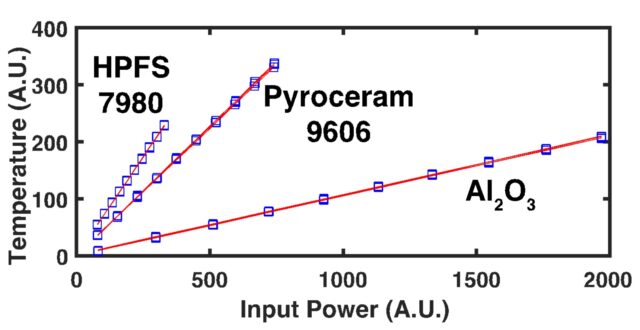
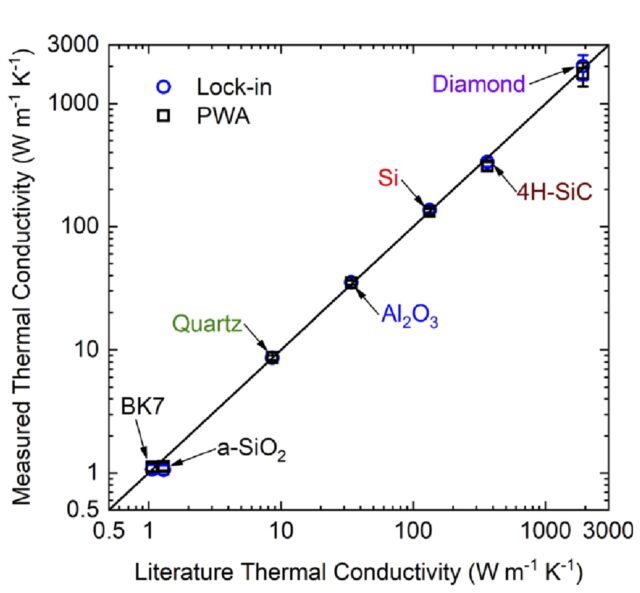
On Wednesday October 14 at 12.45PM (EST), Laser Thermal’s Jeff Braun, Vice President of Programs and Strategy, will present Overcoming Challenges in Thermal Conductivity Measurement, from Soft TIMs to CVD Diamond at Thermal Live Fall 2026. The session covers how TOPS measures thermal conductivity from 0.01 to 3,000+ W/m·K on one instrument, using two complementary methods.
What’s new since our spring session
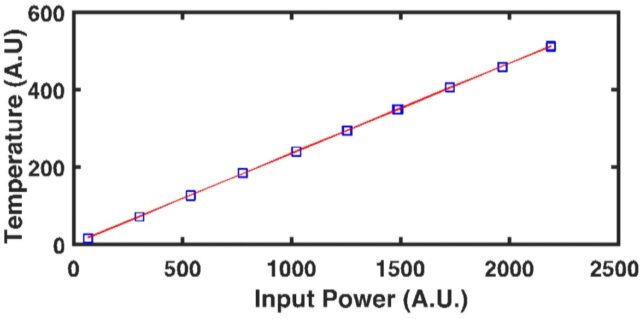
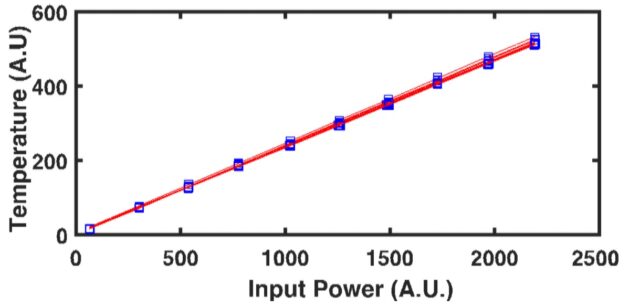
If you joined us in May, this session goes further. TOPS now includes lock-in infrared thermography (LIT), a phase-based method with strong sensitivity to in-plane thermal conductivity. Jeff will share validation data from fused silica to a CVD diamond wafer measured at 2,490 W/m·K, plus results showing that unpolished wafer backsides and rough surfaces don’t change the answer.
What you’ll learn
- How steady-state and lock-in thermography methods work, and when to use each
- How TIMs, gels, pastes, and liquid metals are measured directly, without compression or solidification
- How thermal mapping (up to 150 × 150 mm) reveals uneven TIM application and hidden subsurface damage in PCBs and coatings
- What sample geometry, heat capacity, and film thickness mean for your measurement, and when a thin-film tool such as FASTR is the better fit
Who should attend
Thermal engineers, packaging and materials scientists, and R&D and quality teams working with TIMs, heat spreaders, substrates, wafers, or coatings. It’s especially relevant if you’re qualifying new materials or checking supplier datasheets.
Jeff will take audience questions live after the presentation.
Register through Thermal Live to attend the live session on October 14.